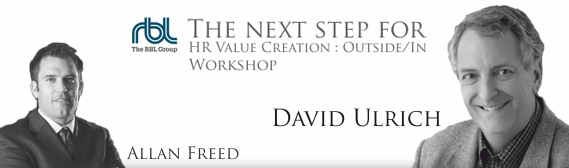
Professor Ulrich and his colleagues have helped shape thinking on how to transform HR practices so that they are outside/in: aligned to customer needs and integrated around organization capabilities to build this employee, customer, and investor results. This day will be organized around 10 trends shaping HR transformation from the outside/in. We begin by addressing the changing business conditions and the implications for managing individual ability, organization capability, and leadership. We will highlight the required organization capabilities of the future and what leaders should know and do to respond to future business realities. We will end with implications for the HR department. Participants will be able to assess these trends and look for areas of improvement.
[toggle_framed title=”Professor David Ulrich Birography” variation=”steelblue”]
 Dave Ulrich is a Professor at the Ross School of Business, University of Michigan and a partner at the RBL Group (http://www.rbl.net) a consulting firm focused on helping organizations and leaders deliver value. He studies how organizations build capabilities of leadership, speed, learning, accountability, and talent through leveraging human resources. He has helped generate award winning data bases that assess alignment between strategies, organization capabilities, HR practices, HR competencies, and customer and investor results.
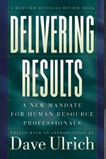
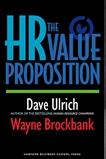 He has published over 200 articles and book chapters and over 25 books. He edited Human Resource Management 1990-1999, served on editorial board of 4 Journals, on the Board of Directors for Herman Miller, and Board of Trustees at Southern Virginia University, and is a Fellow in the National Academy of Human Resources. Honors include:
2011: *Ranked #1 most influential international thought leader in HR by HR Magazine. *Ranked #23 in Thinkers 50 as a management thought leader. *Ranked in Top 100 Thought Leaders in Trustworthy Leadership Behavior.
 2010: *Nobels Colloquia Prize for Leadership on Business and Economic Thinking. *Lifetime Fellowship in Australia Human Resources Institute (AHRI). *Ranked #1 most influential international thought leader in HR by HR Magazine. *Kirk Englehardt Exemplary Business Ethics Award from Utah Valley University. *Why of Work (co-authored with Wendy Ulrich) was #1 best seller for Wall Street Journal and USA Today.
2009: *Listed in Thinkers 50 as a management thought leader. *Ranked #1 most influential person in HR by HR Magazine.
2008: *Ranked #1 most influential person in HR by HR Magazine.
2007: *Lifetime Achievement Award from American Society of Training and Development (ASTD). *Honorary Doctorate from University of Abertey, at Dundee Scotland.
He has consulted and done research with over half of the Fortune 200.
[/toggle_framed]
[toggle_framed title=”Allan Freed Biography” variation=”steelblue”]
 Allan Freed is a principal consultant with The RBL Group, a consulting firm focused on helping leaders and organizations deliver results and increase value. Allan’s current work helps organizations identify and build capabilities required for the execution of strategy through leveraging human resources and improving leadership performance.
Strategic HR – Allan’s work in this domain helps firms to apply RBL’s award winning databases and research to assess alignment between strategies, human resource practices and HR competencies and develop programs for improvement. Allan has worked with HR organizations in Europe, the Middle East, Asia and India.
Leadership: Allan has worked to help organizations in the Middle East and Europe build leadership systems that deliver results and increase value.
[/toggle_framed]
Workshop Dimensions
At the end of the module we will do a stress test of HR from the outside/in along 10 dimensions:
[fancy_numbers variation=”steelblue”]
- HR as understood from the outside/in
- HR responding to the external business context (STEPED)
- HR creating value for customers
- HR creating value for investors
- HR delivering individual ability
- HR delivering organization capability
- HR delivering leadership
- HR department: strategy and structure
- HR practices: aligned, integrated, and innovative
- HR competencies: skills for the future
[/fancy_numbers]